

What Are the Types of Lip Lifts?
There are several types of lip lifts, each catering to different aesthetic needs:
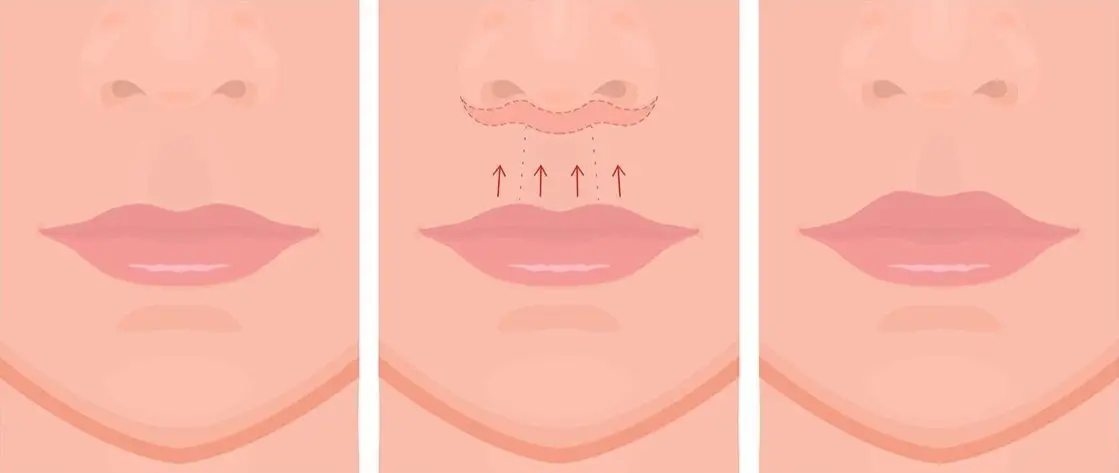
- Subnasal Lip Lift (Bullhorn Lip Lift): The most common procedure, it involves making an incision beneath the nose to lift the center of the upper lip.
- Corner Lip Lift: This focuses on lifting the corners of the mouth to combat drooping.
- Central Lip Lift: This technique is ideal for individuals seeking a subtle enhancement without affecting the rest of the lip.
Procedure Details
How Should I Prepare for a Lip Lift?
Preparation for a lip lift involves:
- Consulting with your surgeon to discuss your goals and medical history.
- Avoiding certain medications, like blood thinners, to minimize the risk of bleeding.
- Arranging for someone to drive you home after the procedure, as you may receive sedation or local anesthesia.
What Happens During a Lip Lift?
During the lip lift procedure:
- Local anesthesia is applied to ensure you are comfortable and pain-free.
- The surgeon makes a small incision, typically beneath the nose (for a subnasal lip lift).
- Excess skin is removed, and the remaining skin is sutured in a way that lifts the upper lip.
- The surgery typically lasts between 30 minutes to an hour.
How Long Does a Lip Lift Take?
The lip lift procedure usually takes around 30 to 60 minutes, depending on the technique used and the complexity of the procedure.
What Happens After a Lip Lift?
After the lip lift, you will notice immediate changes in the shape of your lips. Swelling and bruising are common but will subside over time. Your surgeon will provide detailed aftercare instructions to ensure proper healing.
Risks / Benefits
What Are the Benefits of a Lip Lift?
The primary benefits of a lip lift include:
- A more youthful, vibrant appearance with an enhanced smile.
- Increased definition and volume in the upper lip.
- Long-lasting results that don’t require regular maintenance (unlike lip fillers).
How Painful is a Lip Lift?
The lip lift is generally well-tolerated, especially with local anesthesia. Post-procedure discomfort is typically manageable with prescribed pain medication.
What Are Lip Lift Side Effects?
Common side effects of a lip lift include:
- Swelling and bruising around the upper lip and nose.
- Temporary numbness in the treated area.
- Mild discomfort during the initial recovery phase.
Recovery and Outlook
What is the Recovery Time After a Lip Lift?
Recovery from a lip lift varies from person to person. Generally, you can expect the following timeline:
- First week: Swelling and bruising will be most noticeable.
- Two weeks: Initial recovery occurs, and sutures may be removed.
- One month: The majority of swelling subsides, but residual swelling may last longer.
How Long Does It Take to See the Results of a Lip Lift?
You will notice an immediate improvement after the procedure, with optimal results becoming apparent within a few months once swelling completely subsides and the tissue settles into its new position.
When Can I Go Back to My Regular Activities After a Lip Lift?
Typically, you can resume normal activities after 1-2 weeks. However, avoid strenuous exercises and activities that could disrupt healing for about 4-6 weeks.
Lip Lift Cost
Lip lift cost can vary depending on several factors, such as the surgeon’s expertise, the location of the clinic, and the complexity of the procedure. A lip lift involves removing a small amount of skin from the upper lip area to create a fuller and more youthful appearance. Additional costs may include anesthesia, facility fees, and post-operative care. Since each individual’s anatomy and goals are different, a personalized consultation is the best way to get an accurate cost estimate.
| Lip Lift Turkey | €1,400 – €2,800 |
| Lip Lift UK (England) | €2,700 – €3,500 |
| Lip Lift United States | €2,400 – €6,100 |
| Lip Lift Germany | €1,250 – €2,500 |
| Lip Lift Spain | €2,000 – €3,000 |
| Lip Lift France | €3,000 – €4,000 |
| Lip Lift Ireland | €2,500 – €4,500 |
Quick Facts
| Procedure: | Shortening the distance between the nose and upper lip to create a fuller, more youthful appearance. |
| Duration: | 30–60 minutes |
| Accommodation: | 1–2 nights in a hotel or clinic |
| Anesthesia: | Local anesthesia with sedation or general anesthesia |
| Recovery Time: | Back to work within 5–7 days |
| Compression Garment: | Not typically required |
| Scars: | Hidden under the nose |
| Pain: | Mild discomfort, managed with medication |
| Exercise: | Light activities after a few days; avoid strenuous exercise for 2–3 weeks |
| Shower: | Allowed 1 day post-op |
| Results: | Immediate visible lift and fuller upper lip |
| Possible Side Effects: | Swelling, bruising, temporary numbness or tightness |
| Other Procedures That Can Be Combined: |
Fat Injection to Face, Lip Lift, Mid Facelift, Facelift |
Frequently Asked Questions
How long does the lip lift last?
A lip lift is a surgical procedure with long-lasting, often permanent results. Unlike temporary treatments such as fillers, the effects of a lip lift do not wear off over time. However, natural aging may continue to subtly affect the area in the years following the procedure.
What are the downsides of a lip lift?
Some potential downsides of a lip lift include:
Visible scarring (usually well-hidden at the base of the nose)
Swelling and bruising during recovery
Asymmetry or irregular healing
Numbness or tightness in the upper lip (usually temporary)
Choosing an experienced surgeon can minimize these risks and ensure a more natural outcome.
What is the difference between a lip lift and a lip flip?
A lip lift is a surgical procedure that shortens the distance between the nose and upper lip, enhancing lip shape and visibility permanently. A lip flip, on the other hand, is a non-surgical treatment using Botox to relax the muscles around the upper lip, causing it to subtly roll upward. The lip flip is temporary (lasting about 2–3 months), while a lip lift provides a more dramatic and lasting result.
A lip lift is generally well-tolerated. The procedure is often performed under local anesthesia, so there is no pain during surgery. Afterward, patients may experience mild to moderate discomfort, swelling, and tightness, which can be managed with prescribed pain relief. Most patients return to normal activities within a few days.